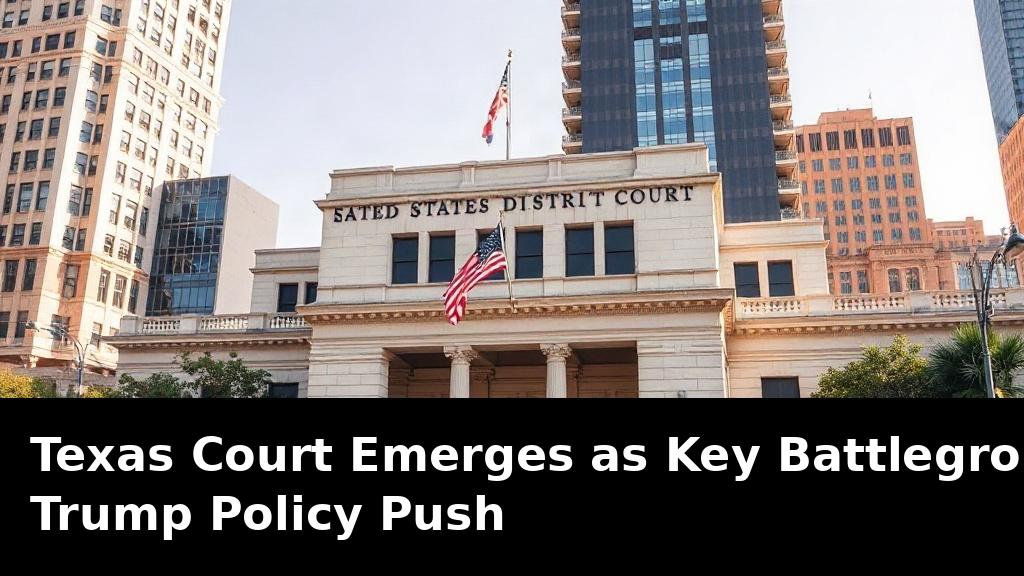
For years, conservative litigants have directed their legal challenges to Judge Reed O’Connor’s courtroom in the Northern District of Texas. The pattern has now shifted, with the Justice Department itself increasingly routing cases through the same venue as it advances the current administration’s priorities.
North Texas has long been known among legal observers for its docket of high-stakes disputes involving federal regulations. Judge O’Connor’s rulings on issues ranging from healthcare mandates to immigration enforcement have repeatedly drawn national attention. The district’s procedural rules and case-assignment practices have made it a predictable destination for litigants seeking swift hearings.
Recent filings show the Justice Department filing or transferring matters that touch on executive-branch initiatives directly into this district. Observers note that this approach allows the administration to test policy interpretations before judges familiar with similar arguments. The move reflects a strategic calculation: concentrating litigation in one sympathetic forum can accelerate nationwide effects through nationwide injunctions.
One notable development is the increasing volume of administrative-law challenges that originate from agency actions rather than outside plaintiffs. Government attorneys appear to be using the district to obtain clarifying orders that align with administration goals. This tactic differs from earlier years when private conservative groups initiated most cases.
Analysts point out that the concentration of cases in a single district raises questions about judicial workload and consistency across circuits. While the Northern District of Texas has handled complex dockets before, the current pace of filings from federal agencies adds new pressure on resources and scheduling.
Another consideration is the precedent effect. Decisions issued in this district can influence how other courts interpret overlapping statutes, especially when appeals reach higher levels. Legal scholars tracking administrative law have begun cataloging how rulings here shape enforcement priorities in areas such as labor rules and environmental permitting.
The shift also highlights broader changes in litigation strategy inside the executive branch. Rather than waiting for external challenges, agencies are proactively seeking judicial review in venues viewed as favorable. This approach can shorten the timeline between policy announcement and court clarification.
Stakeholders on both sides of the political spectrum continue to monitor the docket closely. Future cases expected to arrive in the same court may test the limits of agency authority and the scope of nationwide relief, keeping North Texas at the center of ongoing policy debates.