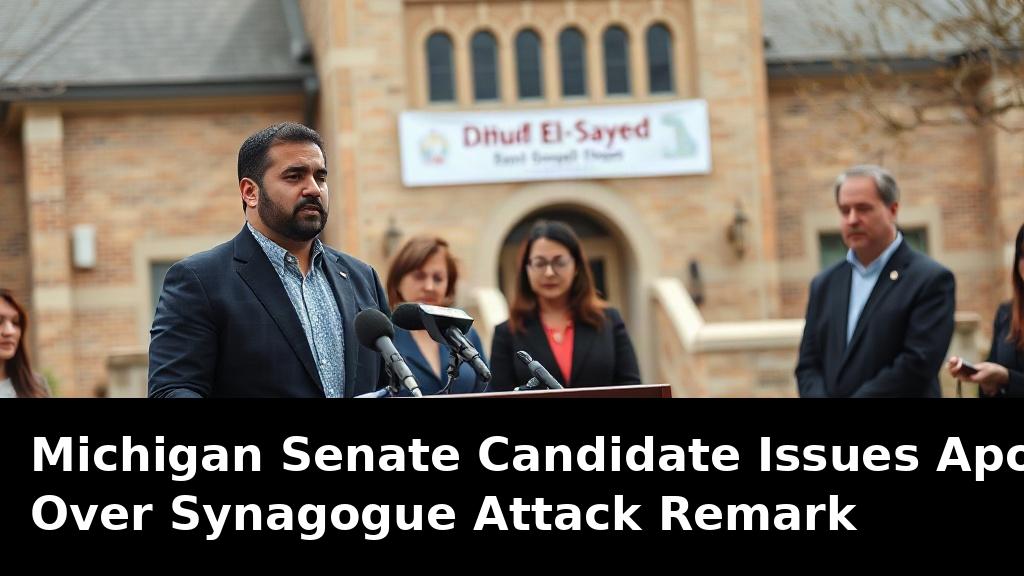
Dr. Abdul El-Sayed, the Democratic nominee for Senate in Michigan, issued an apology following criticism from Jewish Democrats regarding his earlier comment on a synagogue attack. The remark, which stated that hurt people hurt people, drew scrutiny for its perceived insensitivity toward the incident. El-Sayed clarified that his intention was to address broader patterns of violence rather than minimize the specific event.
The controversy emerged after El-Sayed made the statement during a public appearance in March. Jewish community leaders expressed concern that the phrasing could be interpreted as excusing the attack. In response, the candidate met with representatives from affected groups to discuss the impact of his words and issued a formal apology emphasizing his commitment to combating antisemitism.
This incident occurs amid heightened political tensions in Michigan ahead of the Senate race. El-Sayed has focused his campaign on healthcare access and economic issues affecting working families. The apology marks an effort to maintain support within diverse Democratic coalitions.
One key context is the ongoing national discussion about political rhetoric and its influence on community safety. Data from recent years shows increased reports of antisemitic incidents across the United States, prompting candidates in various states to address such concerns directly in their platforms.
Additionally, the role of social media in amplifying political statements has played a part in this situation. Comments made in one setting can quickly reach wider audiences, leading to rapid feedback from advocacy organizations and requiring swift clarification from public figures.
El-Sayed’s response included commitments to engage more closely with Jewish organizations on issues of mutual concern. Observers note that such engagements can help bridge divides in a state with significant Jewish and Muslim populations.
The episode underscores challenges candidates face when discussing complex social issues like violence and its roots. Balancing empathy for victims with analysis of contributing factors remains a delicate task in electoral politics.